




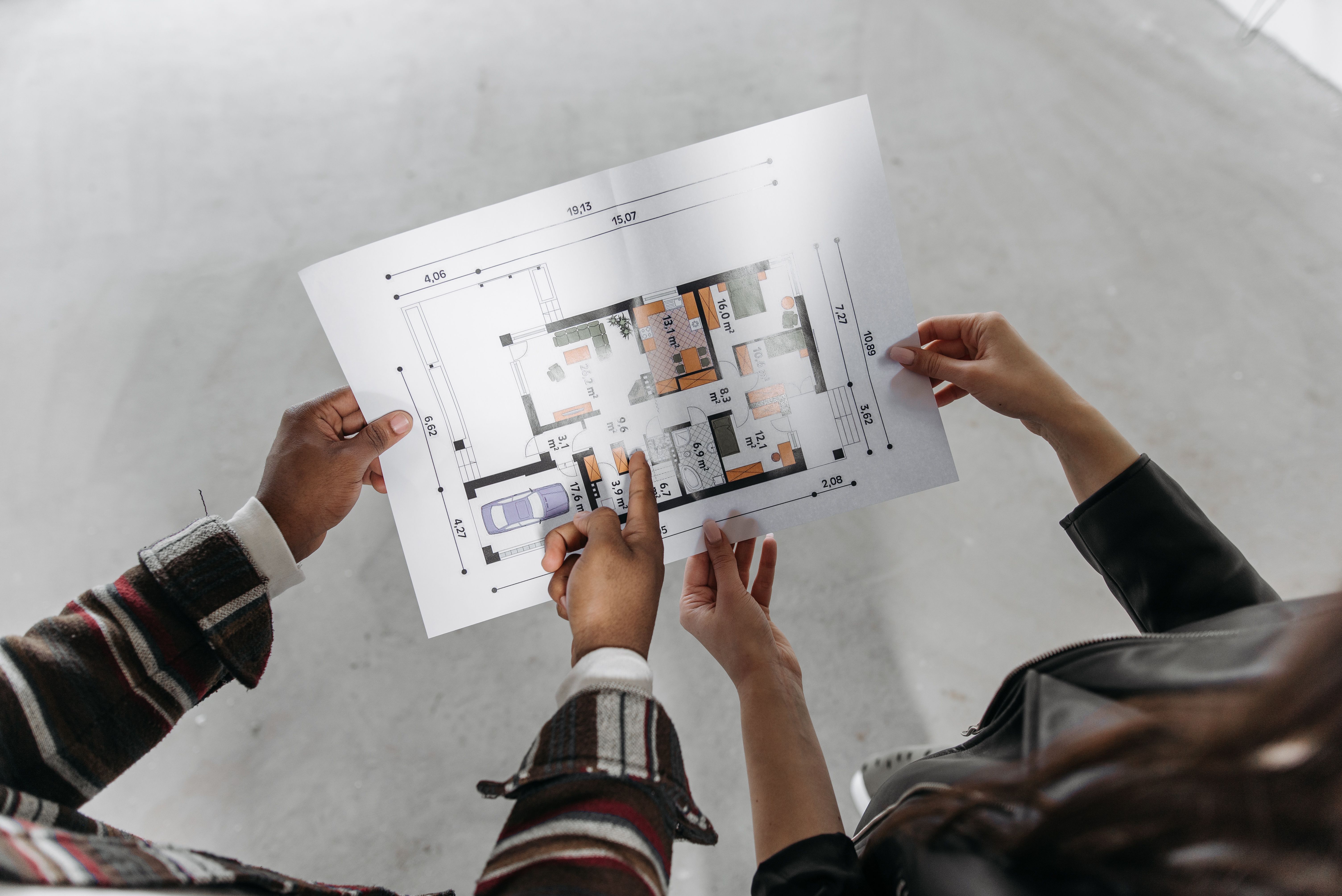
Dedicated CAD Drafter: When Does It Make More Sense Than Project-Based Outsourcing?
A Dedicated CAD Drafter can be the difference between a construction team that keeps pace with its workload and one that’s constantly playing catch-up. Think of your engineering department like a busy kitchen: the engineers are deciding what needs to be served, the project managers are coordinating the orders, and the drafters are turning those decisions into finished plates. When the drafting station gets overwhelmed, the entire kitchen slows down.
That’s what happens when CAD demand grows faster than your team.
Your engineers start spending afternoons incorporating redlines. Project managers start asking when drawings will be ready. Revisions begin stacking up, and work that should take hours starts taking days. Eventually, the problem isn’t that your team isn’t working hard enough. There simply aren’t enough hands on the production side.
At that point, companies usually consider two options: outsource projects as they come in or bring a dedicated CAD professional into the workflow.
Both can work. But they’re built for very different situations.
What Is a Dedicated CAD Drafter?
A dedicated CAD drafter is a professional assigned specifically to your company rather than being shared across a collection of unrelated client projects.
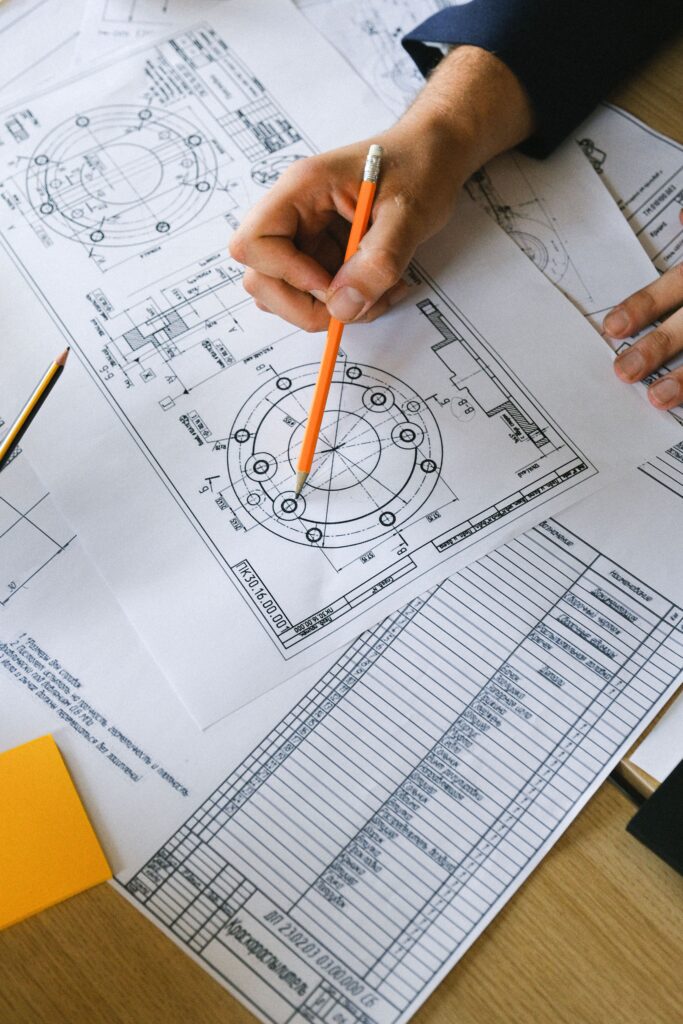
They can handle recurring drafting and production work such as construction drawings, plan preparation, revisions, redlines, as-builts, CAD documentation, and Civil 3D production.
The important difference is continuity.
With project-based outsourcing, you typically have a defined package of work. You send the requirements, the external provider completes the assignment, and the engagement ends when the deliverables are finished.
A dedicated resource works differently.
They remain part of your workflow. They learn your standards, become familiar with your file structure, understand how your engineers communicate changes, and get accustomed to the way your company produces drawings.
Instead of repeatedly explaining how your team works, you eventually have someone who already knows.
That can become a significant advantage when CAD work is part of your company’s everyday operation.
Dedicated CAD Staffing vs. Project-Based Outsourcing
The easiest way to compare the two models is to look at the nature of your workload.
Imagine a contractor wins a large project that requires an unusually high volume of drawings over the next four months. The company doesn’t normally have that level of drafting demand, and once the project is complete, workload should return to normal.
Project-based outsourcing may be the sensible choice.
There’s a defined project, a defined deadline, and a defined amount of work.
Now imagine another company with fifteen active projects. Every week brings new revisions, grading updates, construction documents, utility plans, as-builts, and drawing packages.
The workload isn’t temporary.
It’s the company’s normal workload, and the existing team simply can’t keep up.
That’s when a dedicated CAD professional starts to make more sense.
The question isn’t whether outsourcing is better than hiring.
It’s whether your CAD demand is occasional or ongoing.
When Project-Based Outsourcing Makes More Sense
A dedicated employee isn’t automatically the answer.
Project-based CAD outsourcing can be useful when your company needs additional capacity for a specific period or specialized assignment.
It can make sense when:
- You have a one-off project
- A major deadline has created a temporary backlog
- You need a specialized skill for a particular assignment
- Your workload fluctuates significantly
- You don't have enough recurring work to keep a dedicated person busy
- You need to scale production quickly for a defined project
In these situations, hiring a permanent resource may create more capacity than you actually need.
Project-based outsourcing gives you access to production support when the workload appears without requiring you to maintain that additional capacity after the project ends.
For companies with unpredictable CAD demand, that flexibility can be valuable.
When a Dedicated CAD Drafter Makes More Sense
The calculation changes when the workload becomes predictable.
Maybe your company has been busy for the past year and there’s no sign of the pipeline slowing down.
Maybe your engineers are consistently spending time on drafting instead of engineering.
Maybe your company keeps sending similar CAD assignments to outside vendors every month.
Or perhaps you’re turning down new work because your team doesn’t have enough production capacity to take it on.
Those aren’t isolated project problems.
They’re capacity problems.
A dedicated CAD drafter can give your team another layer of production capacity without requiring you to expand every part of your organization.
Your engineers can focus on engineering decisions. Project managers can focus on project delivery and clients. The drafter can focus on the production work that keeps everything moving.
That’s a much more sustainable arrangement when the workload is recurring.
The Hidden Advantage Is Familiarity
Here’s something that doesn’t show up neatly on a staffing spreadsheet: the value of someone knowing how your company works.
Every engineering and construction company has its own habits.
You may have specific layer standards, templates, title blocks, naming conventions, folder structures, Civil 3D styles, plotting requirements, or review procedures.
A project-based vendor can learn those requirements, but every new assignment still involves some degree of orientation.
A dedicated professional gets to build that knowledge over time.
Eventually, instead of explaining:
“Here’s our template. Here’s how we organize the sheets. Here’s how we handle revisions. Here’s how our engineers want the redlines incorporated.”
You can simply send the next assignment.
That familiarity can reduce friction and make recurring production work easier to manage.
Distributed CAD Teams Need a Reliable Workflow
Continuity becomes even more important when CAD work is distributed across offices or remote locations.
Premise, a multidisciplinary engineering consultancy with more than 150 staff across 13 offices in Australia, Vietnam, and Papua New Guinea, is a useful example. Its civil projects were designed in Australia and then packaged to an international office for final AutoCAD deliverables. As the business grew, it encountered problems with VPN performance, file references, version control, and keeping different offices on the latest project data.
Premise eventually implemented a centralized workflow that gave its teams better control over project data, revisions, and CAD collaboration. The company reported improved collaboration across its offices and significant savings in travel and IT costs.
Read Premise’s CAD workflow case study
The takeaway isn’t that every company needs Premise’s exact technology stack.
It’s that distributed CAD production needs structure.
If people are working in different locations, your file management, naming conventions, revision process, communication, and quality-control procedures need to be clear. Otherwise, adding more people can simply create more opportunities for duplicate files, outdated drawings, and unnecessary rework.
A Remote CAD Drafter Doesn't Mean Giving Up Control
Some companies hesitate when they hear “remote” because they associate physical distance with reduced control.
That’s not necessarily how it works.
A remote CAD professional can work within your company’s hours, communication channels, project-management system, CAD standards, and review process.
The physical location of the person matters much less when the workflow is properly designed.
What matters is whether you can answer basic operational questions:
Who assigns the work?
Who answers technical questions?
Where are project files stored?
How are revisions communicated?
Who reviews completed drawings?
What happens when priorities change?
When those responsibilities are clear, a remote team member can function as an extension of your existing operation rather than as an isolated vendor.
And there’s evidence that the technology behind the workflow matters, too.
QK, a civil engineering firm in California, had struggled with remote access to large, transaction-heavy CAD files. Its earlier setup involved centralized servers, VPN access, and other workarounds that created performance and version-control problems. QK eventually centralized roughly 8 TB of project data and reported that its CAD staff were working about 40% faster after the change.
Read QK’s civil engineering case study
The lesson is straightforward: remote staffing works best when the systems around the people work, too.
What Should a Dedicated CAD Drafter Actually Handle?
A dedicated CAD drafter should generally handle work that is important to project delivery but doesn’t necessarily require the engineer to perform every production step personally.
Depending on your business, that could include:
- Construction drawings
- Site and grading plans
- Utility layouts
- Plan and profile sheets
- Drawing revisions
- Redline incorporation
- As-built documentation
- Civil 3D model updates
- Sheet preparation
- Detail drawings
- CAD cleanup
- Production documentation
This is where dedicated CAD Drafting Support can make a noticeable difference.
The engineer determines what needs to happen.
The drafter helps turn that decision into a finished drawing.
That division doesn’t diminish the engineer’s role. It protects their time for the work that actually requires engineering judgment.
If you’re looking for a dedicated resource specifically for this type of recurring production work, you can explore Remotation’s dedicated CAD drafter service.
What About Civil 3D?
For civil engineering firms, the distinction becomes even more important when most of your production work happens in Civil 3D.
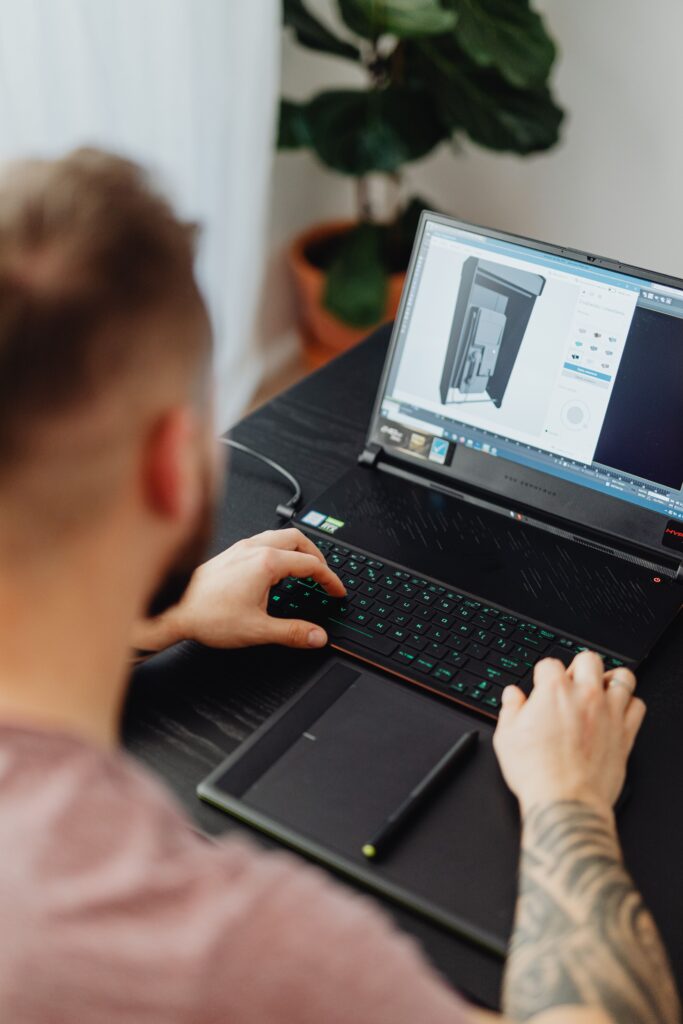
A Civil 3D Drafter may need to work with surfaces, alignments, profiles, grading, pipe networks, data shortcuts, sheet production, and other Civil 3D-specific workflows.
So don’t stop at asking whether someone “knows Civil 3D.”
These questions are essential:
- Have they prepared grading plans?
- Have they worked with existing and proposed surfaces?
- Have they created or modified profiles?
- Have they worked with pipe networks?
- Have they handled plan and profile sheets?
- Have they incorporated engineering redlines?
- Have they worked within an established company standard?
- Those answers tell you considerably more than a software name on a résumé.
Dedicated Staffing Can Expand Your Hiring Pool
Finding the right CAD professional locally can be difficult, particularly when you need a specific combination of software experience and industry knowledge.
You may have the workload and the budget, but the candidates simply aren’t there.
That’s one reason companies consider remote and offshore staffing.
Instead of restricting your search to people who live within commuting distance of your office, you can broaden the talent pool and look for professionals based on their skills and experience.
Remotation’s resource profiles are an example of this approach, allowing companies to review available professionals who can potentially be added as remote employees.
But expanding the talent pool shouldn’t mean lowering your standards.
The person still needs to understand your software, your type of work, your drafting standards, and your expectations for quality.
The goal isn’t to find the cheapest available resource.
It’s to find someone who can reliably remove a bottleneck from your team.
Don't Make Cost the Only Factor
Cost is obviously part of the decision, but comparing a dedicated resource with an in-house employee based solely on salary can give you an incomplete picture.
An in-house hire can involve recruitment, benefits, payroll, office space, equipment, IT support, HR administration, software, and other employment costs.
A dedicated staffing model may structure many of those responsibilities differently.
The more useful question is:
What does it cost to add this amount of productive CAD capacity to my business?
That’s a better comparison.
You should also compare it with what you’re already spending on project-based outsourcing.
If you’re repeatedly sending similar assignments to external vendors, those individual project costs can add up. You’re also spending internal time briefing vendors, transferring files, explaining standards, reviewing deliverables, and coordinating schedules.
A dedicated resource can reduce some of that repeated overhead because the person stays within your workflow.
The Best Model Might Be Both
You don’t necessarily have to choose between dedicated staffing and project-based outsourcing forever.
A company might have a dedicated CAD professional handling its regular workload while using project-based outsourcing when an unusually large project arrives.
Think of it as core capacity plus overflow capacity.
Your dedicated resource handles the everyday workload: revisions, plan production, Civil 3D updates, construction documents, and other recurring tasks.
Then, when a major project temporarily pushes demand beyond what the core team can handle, project-based outsourcing gives you additional flexibility.
The dedicated model provides consistency.
Project-based outsourcing provides elasticity.
Together, they can create a much more adaptable operation.
How Do You Know If You Need a Dedicated CAD Drafter?
You don’t need a complicated formula. Simply start observing your team and ask:
- Are engineers regularly spending time on drafting?
- Are drawing revisions sitting in queues?
- Are project managers constantly asking when drawings will be ready?
- Are you repeatedly outsourcing the same types of CAD work?
- Are you turning down projects because you don't have enough production capacity?
- Are you spending too much time coordinating outside vendors?
- Are you struggling to find qualified CAD professionals locally?
If you’re answering “yes” to several of those questions, you may not have a temporary workload problem.
You may have a structural capacity problem.
And that’s where a dedicated resource starts to become much more compelling.
What Should You Look for in a Dedicated CAD Professional?
Once you’ve decided that dedicated staffing makes sense, don’t start with the résumé.
Start with the work.
Define what the person will actually be doing. Identify the software they need to know. Establish the types of drawings they’ll produce. Decide how their work will be reviewed.
Then evaluate candidates against those requirements.
Relevant software experience
If your projects rely heavily on Civil 3D, actual Civil 3D experience should matter more than a generic claim of CAD proficiency.
Industry experience
Someone who understands civil engineering, construction, land development, or infrastructure workflows may require less training than someone coming from an unrelated drafting environment.
Accuracy
A fast drafter who consistently makes mistakes isn’t increasing your capacity. They’re increasing your review workload.
Attention to detail
Small errors in drawings can create unnecessary revisions and delays later in the project.
Communication
A good drafter should know when to ask a question rather than quietly make an assumption.
Ability to follow standards
Your company doesn’t need someone who insists on doing everything their own way. You need someone who can work within the system you’ve already built.
Consistency
The real value of dedicated staffing comes from dependable output over time, not one impressive drawing.
Dedicated CAD Staffing Isn't About Replacing Your Team
The strongest case for a dedicated CAD professional isn’t that they can replace your existing employees.
It’s that they can make those employees more effective.
Your engineers shouldn’t have to spend hours fixing routine linework when they could be solving design problems.
Your project managers shouldn’t have to chase drawing revisions when they could be managing clients, schedules, and project risks.
Your senior CAD professionals shouldn’t have to spend every day buried under repetitive production work when their experience could be used on more complex assignments.
A dedicated CAD professional gives your team somewhere to push that production workload.
That’s the real value.
So, Which Model Is Right for Your Company?
If your CAD requirements come in occasional bursts, project-based outsourcing may be the smarter option.
If your company has recurring drafting demand, a growing backlog, and a team that needs consistent production support, a Dedicated CAD Drafter may be the better fit.
And if you’re somewhere in the middle, there’s nothing wrong with combining both approaches.
The goal isn’t to outsource as much work as possible.
It’s to build a workflow where the right person handles the right task at the right time.
For a growing construction or civil engineering company, that can be the difference between constantly trying to catch up and having enough capacity to keep moving forward.
Sometimes growth doesn’t require rebuilding the whole kitchen.
Sometimes you just need another pair of hands at the counter.