


CAD Outsourcing: How Construction Companies Can Reduce Costs Without Sacrificing Quality
CAD outsourcing could be the difference between watching your project margins disappear and watching your construction business scale profitably. But the real question is whether you can really cut drafting costs without cutting corners on quality.
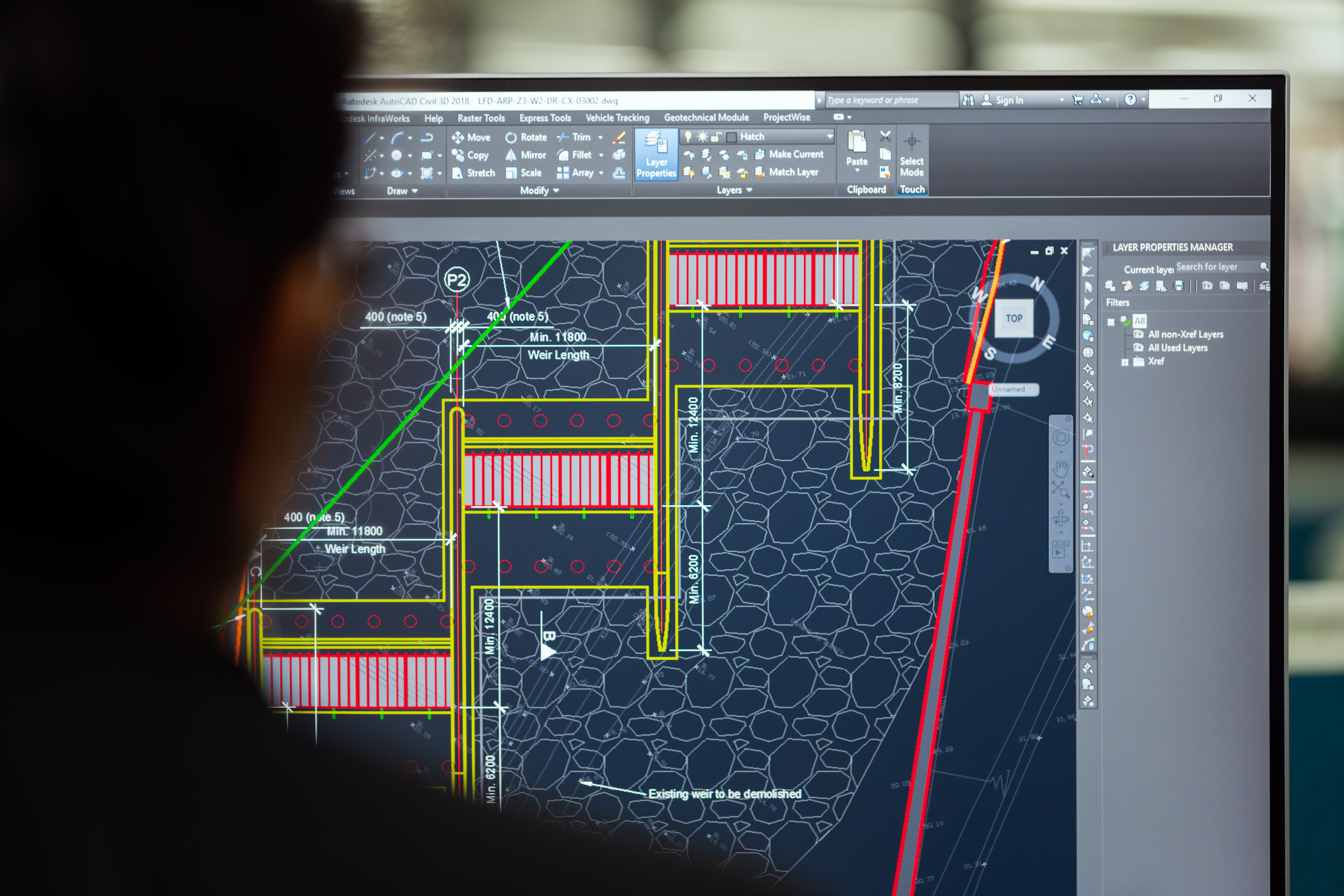
CAD work sits at the heart of countless construction and engineering projects. From detailed floor plans and structural drawings to revisions, shop drawings, site plans, and construction documentation, accurate drafting keeps projects moving. But maintaining a fully staffed in-house CAD department can get expensive quickly.
Salaries are only part of the equation. Costs also include recruitment, benefits, office space, equipment, software, training, management, and downtime between projects. Thus, even your “in-house” drafting team comes at a significant fixed cost. Smart construction companies avoid most of them via CAD outsourcing.
Done correctly, outsourcing doesn’t mean handing your drawings to the lowest bidder and hoping for the best. It means gaining access to experienced CAD professionals, scalable resources, and structured production support without having to pay to set up a complete other department.
What Is CAD Outsourcing?
At its simplest, CAD outsourcing involves assigning computer-aided design and drafting tasks to an external professional or dedicated team. But modern outsourcing can go much further than simply sending drawings back and forth.
Construction companies use outsourced CAD services for:
- Architectural drafting
- Structural drafting
- Civil drafting
- MEP drawings
- Shop drawings
- Construction documentation
- As-built drawings
- Drawing revisions
- CAD conversion
- Detail drawings
- CAD production support
- Design documentation
The key is finding the right outsourcing model. A company might outsource occasional drafting overflow. Another might establish a remote CAD team that works alongside its U.S.-based engineers and project managers every day. The distinction matters.
1. The Biggest Savings Don't Come From Paying Less for CAD
This misconception needs clearing up. The real financial advantage of CAD outsourcing isn’t simply finding someone who charges less per hour.
It the cost elimination of an expensive in-house infrastructure for work that can be done much more efficiently at a fraction of the cost.
When you hire an in-house CAD specialist, you pay for recruitment, onboarding, equipment, software, office space, benefits, payroll administration, training, management. And these costs don’t even include the salary and bonuses. And these costs only become a bigger nuisance as project pipelines fluctuate in speed.
With CAD resource augmentation, you can add drafting capacity when you need it without necessarily taking on all the fixed costs associated with another permanent employee. That’s particularly valuable for construction companies whose workloads fluctuate from one project to another.
2. Experienced Talent Can Be More Valuable Than Cheap Talent
Here’s where CAD outsourcing gets interesting. Saving money doesn’t mean much if an inexperienced drafter creates errors that lead to revisions, delays, or expensive rework.
A low-cost resource isn’t necessarily a low-cost solution. For construction companies, experience can be worth considerably more than a slightly lower hourly rate.
An experienced CAD professional already understands drawing conventions, project workflows, revisions, documentation requirements, and the importance of getting the details right. They won’t necessarily need the same level of hand-holding as someone fresh out of college.
That’s one of the major advantages of a properly structured offshore model.
Rather than hiring a freshly graduated employee locally and spending months developing their skills, companies can gain access to experienced professionals at a fraction of the cost of hiring equivalent talent in the U.S.
This is where CAD staff augmentation can become particularly powerful. You’re not simply adding another pair of hands. You’re adding experience.
3. Offshore CAD Drafting Doesn't Have to Mean "Out of Sight, Out of Mind"
The phrase offshore CAD drafting sometimes creates an image of disconnected freelancers working in a completely different environment. That’s not how modern offshore staffing has to work. With the right setup, an offshore employee can function as an extension of your existing construction team.
For example, a U.S. construction company might have a project manager and senior engineer working locally while a dedicated offshore CAD professional handles drawing production, revisions, detailing, and documentation.
The local team remains focused on decisions, clients, site requirements, and project management.
The offshore team handles production. It’s a division of labor that can make the entire operation more efficient. Cloud-based construction platforms have also made distributed collaboration significantly easier. Autodesk, for example, highlights cloud collaboration as a way to connect remote teams and project data while supporting coordinated workflows.
4. Quality Comes From Processes, Not Geography
Here’s something every construction company considering CAD outsourcing should remember:
Quality control isn’t determined by where your CAD professional sits. It’s determined by how the work is managed.
A strong CAD drafting support process should include clearly defined standards for:
- Layer organization
- File naming
- Dimensioning
- Drawing templates
- Revision control
- Annotation
- File formats
- Quality checks
- Approval procedures
Autodesk’s documentation on CAD standards specifically emphasizes consistent drawing organization, including standardized layers, text styles, linetypes, and dimension styles.
That’s important when you’re working with a remote CAD team.
Your offshore professional shouldn’t have to guess how your company wants drawings prepared. Give them your standards, templates, examples, and workflows, and the production process becomes much more predictable.
5. CAD Back Office Support Can Free Your Best People
Ask yourself this:
Should your senior engineer really be spending hours making drawing revisions?
Sometimes the answer is yes. But often, it isn’t.
Senior engineers and project managers bring enormous value to a construction business. Their time is better spent on engineering decisions, client communication, project oversight, site coordination, and problem-solving.
This is where CAD back office support becomes useful.
Routine but essential production work can be delegated to a dedicated drafting resource while senior professionals concentrate on higher-value responsibilities.
That doesn’t reduce the importance of drafting. It increases the value of everyone’s time. And when you remove production bottlenecks, your team can potentially handle more projects without increasing headcount at the same rate.
6. Outsourcing Can Scale With Your Workload
Construction workloads aren’t always predictable.
You might have three major projects this quarter and six the next. Suddenly, your drafting department is buried under revisions and documentation. Hiring another permanent employee could take weeks, sometimes even months.
CAD production support gives construction companies another option.
You can bring in additional drafting capacity during periods of high demand, support a particularly complex project, or establish a long-term dedicated resource if the workload becomes permanent. That’s the beauty of CAD resource augmentation.
Instead of forcing your workforce to fit your workload, you can make your workforce more adaptable to it.
7. Collaboration and Document Control Still Matter
Outsourcing works best when everyone is working from the same information.
Imagine your project manager is working from Revision 7 while your CAD drafter has Revision 5. That’s not a productivity problem. That’s a project risk.
A common data environment can help teams centralize project information, manage revisions, control access, and reduce confusion around the latest files. Autodesk notes that centralized project information can improve collaboration, efficiency, quality, and risk management.
Your outsourcing partner should therefore be comfortable working with the systems your company already uses. That could include AutoCAD, Civil 3D, Revit, Autodesk Construction Cloud, BIM platforms, cloud storage, project management systems, and your own internal processes.
The goal isn’t to create a separate workflow. It’s to integrate the outsourced resource into yours.
What Should You Look for in a CAD Outsourcing Partner?
Not all CAD outsourcing providers are created equally.
Before choosing a partner, ask:
- 1.Do they provide experienced professionals?
- Cheap labor isn’t useful if you spend your time correcting mistakes.
- 2.Can they provide dedicated resources?
- A dedicated employee can learn your standards and become familiar with your projects.
- 3.Do they understand U.S. construction workflows?
- Industry knowledge can dramatically reduce communication gaps.
- 4.Can they work your hours?
- If your CAD resource works according to your U.S. team’s schedule, collaboration becomes much easier.
- 5.Who manages the employee?
- Understand whether you’re hiring a freelancer, a managed service, or a dedicated offshore employee.
- 6.What infrastructure is provided?
- A mature offshore staffing model should account for workspace, equipment, HR, and other operational requirements.
For companies exploring professional CAD drafting support, you can learn more about Remotation’s dedicated CAD staffing solution here: Remotation CAD Drafter Services
CAD Outsourcing Isn't About Replacing Your Team
The smartest construction companies aren’t necessarily using CAD outsourcing to replace their in-house employees. They’re using it to make their existing employees more productive.
Your engineers can focus on engineering. Your project managers can focus on projects. Your senior staff can focus on clients and critical decisions. And your dedicated CAD professionals can focus on producing the detailed drawings that keep everything moving.
That’s the real opportunity.
When you combine experienced talent, standardized workflows, modern collaboration technology, and the right staffing model, CAD drafting outsourcing can become much more than a cost-saving tactic. It can become a competitive advantage.
The companies that get the most from outsourcing aren’t the ones looking for the cheapest resource.
They’re looking for the right resource at the right cost.
And that’s an important distinction.
The Bottom Line
CAD outsourcing can reduce costs without sacrificing quality. But this only occurs when approached strategically.
The winning formula isn’t simply “offshore and save.”
It’s experienced professionals + dedicated support + clear standards + strong communication + scalable staffing.
For construction companies facing rising labor costs, drafting backlogs, tight deadlines, or difficulty finding experienced CAD professionals, that’s a compelling combination. And perhaps the biggest advantage is this: you don’t have to choose between quality and affordability anymore.
With the right outsourced CAD services partner, you can build a capable extension of your team, access experienced professionals at a fraction of traditional hiring costs, and scale your drafting capacity when your projects demand it.
The future of construction isn’t about doing everything in-house. It’s about building smarter teams.
Stay tuned to Remotation for more practical insights into offshore staffing, construction technology, CAD production, and smarter ways for U.S. construction companies to build stronger, more scalable teams.