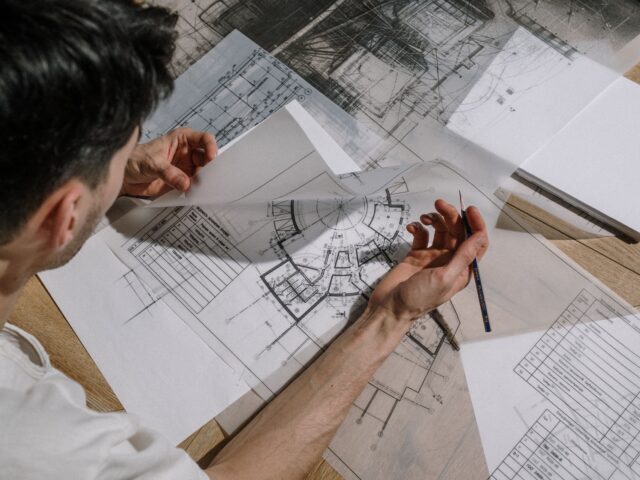



If done right, offshore construction drafting can increase productivity, minimize labor costs, and provide access to senior drafting talent simultaneously.
The rising trend of construction companies opting for offshore employees has led to many remote services popping up in the industry over the years.
While the construction industry has also been facing labor shortages, rising local wages, shorter delivery deadlines, and increased client expectations, access to digital collaboration tools has completely transformed daily operations. Today, architects, engineers, estimators, CAD drafters, and even construction managers are able to work remotely. In other words, offshore construction drafting has effectively evolved from a cost-cutting tactic to a competitive advantage for proactive construction firms.
Proactive construction organizations aren’t looking for remote employees just to reduce costs; their main focus is creating and establishing a team where productivity is enhanced, delivery cycles are faster, and work gets done during company hours. Companies that have successfully adopted these business models are getting the highest ROI while incurring the lowest costs!
Let’s explore the reasons why this trend is accelerating and how it may eventually evolve the construction industry.
The Perfect Storm Driving Offshore Construction Drafting
Several developments and industry shifts have made offshore drafting a much better choice than hiring locally.
While construction demand still remains strong, with a plethora of projects, commercial and residential. This is where the requirement of finding experienced CAD and architectural drafters is reaching an all-time high. Hiring an experienced resource from the locality means higher expenses along with a limited pool of candidates to choose from.
On the other hand, sourcing civil engineers from agencies like Remotation brings a virtually limitless pool of experienced and professional candidates. This makes offshore outsourcing a much more feasible option than hiring from the local pool.

It’s Not About Cheap Labor. It’s About Better Talent!
A major misconception with offshoring is that companies only do it to get cheaper labor. In reality, proactive construction corporations are getting experienced employees. The only factor that matters is finding the right construction outsourcing company.
We at Remotation are always happy to report that we never recruit fresh graduates. In fact, our focus is always to find an experienced candidate, one who understands industry standards and can bring value to our clients. And since we are able to source employees at one-third of the cost of a fresh graduate, we naturally bring more value than most can comprehend.
Simply put, our hires don’t need extensive training programs and are almost ready to contribute from their very first week. This effectively translates into improved productivity, minimized revisions, and faster completion.
Offshore Home Builders Drawing Services Are Becoming Essential
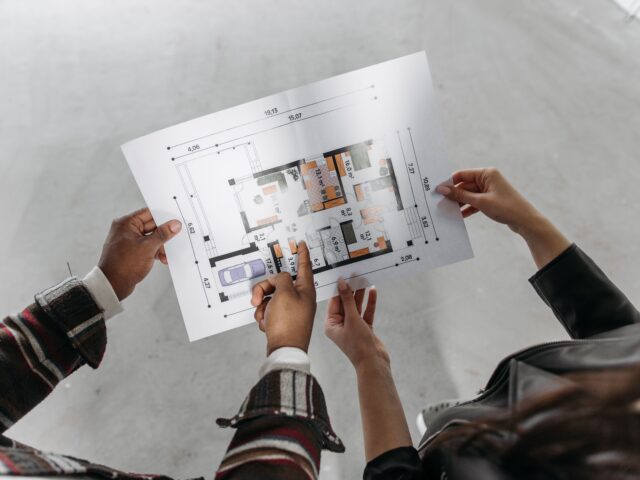
Residential construction is also becoming increasingly design-intensive. Modern contractors and home builders have to come up with highly detailed floor plans, elevations, framing layouts, as well as 3D visualizations while ensuring that deadlines are timely met.
This has further field the growing demand for offshore home builders drawing services. Rather than pay the overwhelming costs of premises and equipment for internal teams, builders often opt for outsourcing with offshore drafting professionals. These professionals provide detailed schematics with consistent delivery to boost efficiency while also minimising costs.
This is further synergized with experienced offshore drafters, who can adapt to a builder’s preferred drafting standards and documentation processes with ease.
Offshore Home Builders Drafting Creates Scalable Growth
Construction companies that have stayed in the past with solely local and physical labor often encounter difficulty in scaling their operations. Permanent employees require office space, equipment, training and recruitment costs, perks, as well as consistent management.
All these obstacles vanish with construction outsourcing companies like Remotation, where everything is done by the agency, and all the builder needs to do is pay less than half the wage. This type of offshore home builders drafting also allows companies to scale much faster.

Real-World Companies Are Already Working Globally
Some of the largest engineering and construction organizations have already demonstrated success with offshore employee structure.
Skanska, is a construction company that has adopted digital-first workflows, BIM coordination, and collaborative design processes to improve efficiency with reduced project risks and consistent deliveries. As one of the industry leaders opting for offshore employees, the business model is also easily applicable for small and medium-sized construction corporations.
What Is a Company’s Goal in Using Offshoring?
Every business has different priorities, but several similar objectives can be consistently observed.
Companies adopt offshore staffing to:
- Reduce operational costs without sacrificing quality.
- Access experienced specialists that may be difficult to recruit locally.
- Improve turnaround times through larger drafting capacity.
- Scale teams based on project demand.
- Allow in-house architects and engineers to focus on higher-value work.
- Maintain profitability despite increasing labor costs.
Ultimately, what is a company’s goal in using offshoring?
It’s simple: accomplish more work with greater flexibility while maintaining exceptional quality.
Pros and Cons of Offshoring and Outsourcing
Like every business strategy, there are advantages and challenges.
Pros
- Lower recruitment and employment costs
- Access to experienced drafting professionals
- Faster project turnaround
- Flexible team scaling
- Reduced administrative burden
- Increased productivity
Cons
- Requires strong communication processes
- Success depends heavily on selecting the right staffing partner
- Initial onboarding still requires documentation and workflow alignment
It must be noted that these challenges can be minimized when your offshore employees work solely for you (remotely, but permanently employed), and during your business hours to ensure your business hours are effectively utilized.
Fortunately, these challenges become minimal when your offshore employees work exclusively during your business hours and are fully managed by an experienced staffing provider.
More Companies Are Looking to Hire Offshore CAD Drafters
The demand to hire offshore CAD drafter professionals continues to rise because drafting workloads tend to fluctuate dramatically. While some months involve permit sets, others require construction documentation, revisions, shop drawings, or BIM coordination.
Rather than overloading internal teams or constantly recruiting new employees, construction firms prefer to build reliable offshore employees as extensions to their internal design departments.
The result? Greater consistency, happier employees, and better project delivery.
Why Remotation Makes Offshoring Different
Not every offshore staffing company operates the same way. Many providers simply connect businesses with freelancers. However, we at Remotation take a fundamentally different approach.
We recruit experienced construction professionals (those with proper skill sets), not recent graduates. We employ them directly, provide modern office facilities, manage payroll, handle HR, maintain infrastructure, and ensure they work according to your company’s operating hours.
For construction firms, that means gaining a reliable, long-term team member without the administrative complexity of international hiring. You receive senior-level expertise at a fraction of traditional hiring costs while maintaining complete control over the work being delivered.
The Future Is Already Here
The question is no longer whether companies should outsource offshoring initiatives for drafting. It’s how quickly they can build a reliable offshore team before the competition.
As physical labor shortages continue, digital collaboration improves, and project demands increase, offshore construction drafting will become a standard operating procedure for how successful construction companies operate.
Businesses that embrace this model today will be better positioned to scale faster, control costs, and deliver projects with greater confidence tomorrow.
And this is only the beginning.
Stay tuned for more insights from Remotation as we continue exploring the future of offshore construction staffing, digital collaboration, and smarter ways to build stronger construction teams in 2026 and beyond.