




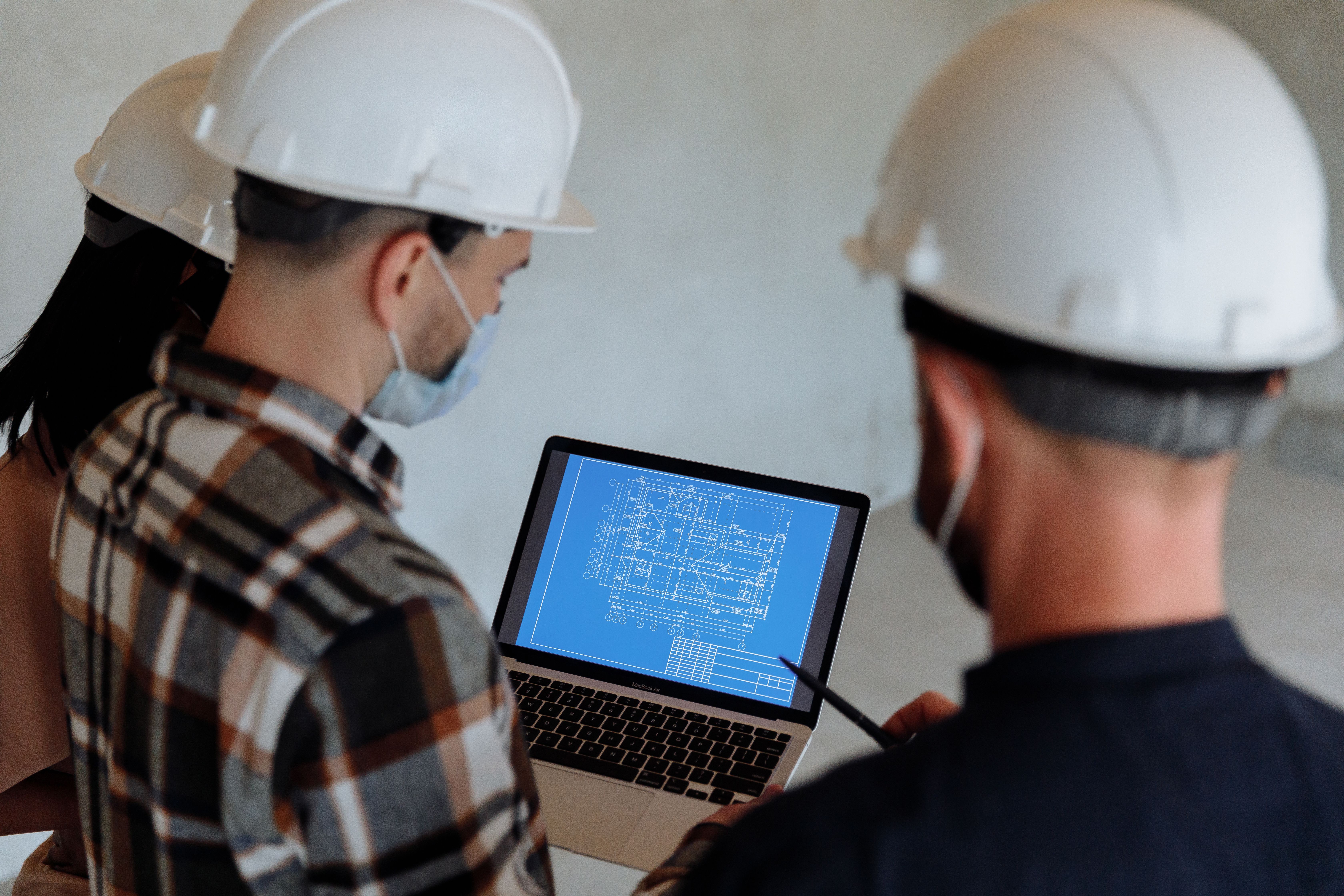
Civil 3D Outsourcing: What Construction Companies Should Outsource and What Should Stay In-House
Civil 3D Outsourcing can give construction and civil engineering companies much-needed drafting capacity without forcing them to expand their entire in-house team. But there’s an important distinction: not every part of a Civil 3D project should be handed off to an outside team.
The most successful approach isn’t usually about outsourcing everything. It’s about identifying the work that consumes your team’s time without requiring senior engineering judgment, then building a reliable process around it. When that line is drawn correctly, your engineers can spend more time solving problems, managing projects, and working with clients while production work continues in parallel.
What Does Civil 3D Outsourcing Actually Mean?
Civil 3D outsourcing is the practice of using an external professional or team to handle some of the technical production work involved in Civil 3D projects.
That can include creating and updating surfaces, preparing plan sheets, making drawing revisions, developing profiles and alignments, updating utility layouts, preparing construction documents, and handling other repetitive drafting tasks.
The important word here is some.
Outsourcing doesn’t necessarily mean handing an entire project to another company and waiting for the finished drawings to come back. For many construction and civil engineering firms, a better model is to keep engineering leadership and decision-making in-house while using external Civil 3D professionals to expand production capacity.
That distinction gives you more control while still addressing one of the biggest challenges firms face: having more work than their current drafting team can comfortably handle.
What Civil 3D Work Should You Outsource?
The easiest work to outsource is generally work that is well-defined, repeatable, and governed by established standards.
For example, imagine your engineering team has completed the design for a commercial site development project. The engineering decisions are already made, but someone still needs to produce dozens of sheets, incorporate redlines, update profiles, revise labels, prepare details, and keep the drawing set consistent.
Having a licensed engineer spend hours on those production tasks may not be the best use of their time.
This is where Civil 3D outsourcing can make a significant difference.

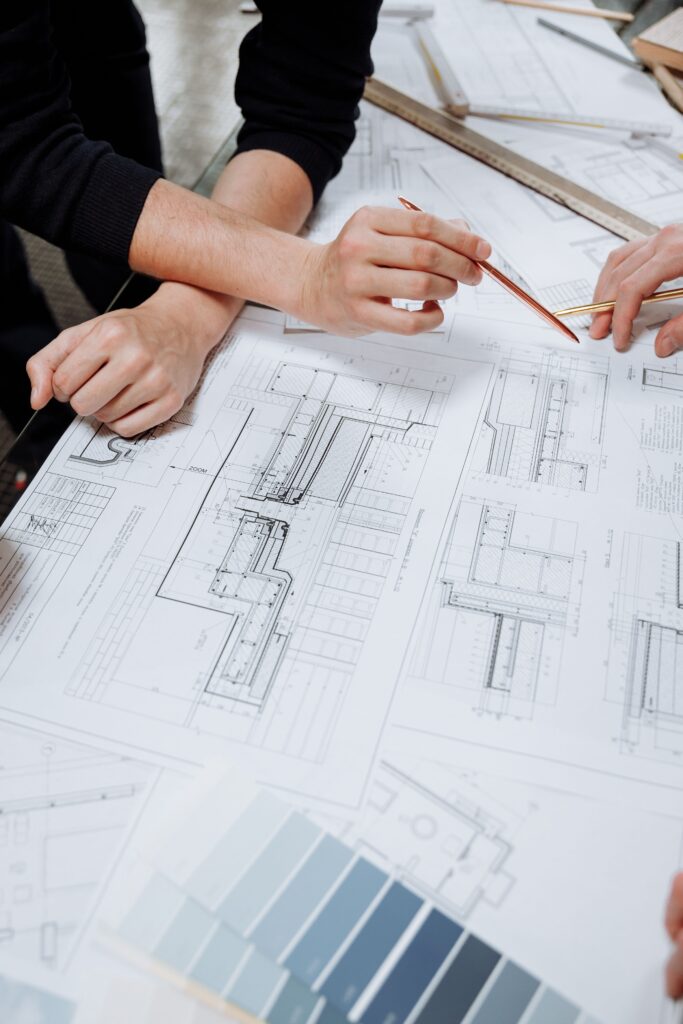
1. Drawing Production
Routine drawing production is one of the most straightforward areas to outsource.
An experienced Civil 3D professional can work from your existing designs and standards to prepare:
- Site plans
- Grading plans
- Utility plans
- Profiles
- Plan and profile sheets
- Construction documents
- Details and annotations
- As-built drawings
- Permit drawing packages
The goal isn’t to remove your engineers from the process. It’s to keep them from becoming the bottleneck for every drawing-related task.
2. Revisions and Redlines
Civil engineering projects rarely move from first design to final construction documents without changes.
Client comments come in. Contractors identify issues. Engineers adjust designs. Municipal requirements change. Someone then has to incorporate all of those changes into the drawings.
A dedicated Civil 3D drafter can handle much of this production work while the engineer remains responsible for reviewing the changes and making the actual design decisions.
That creates a useful division of responsibility: the engineer decides what needs to change, while the drafter helps execute the change accurately and efficiently.
3. CAD Production and Documentation
Some projects involve large amounts of production work that doesn’t necessarily require an engineer at every stage.
Updating sheet sets, organizing drawing files, maintaining templates, applying standards, cleaning up drawings, and preparing documentation can all consume valuable hours.
These tasks are often ideal candidates for outsourcing because they can be performed according to documented company standards and reviewed through an established quality-control process.
4. Civil 3D Model Updates
Civil 3D models can require continuous maintenance throughout a project.
Surfaces change. Alignments are adjusted. Profiles need to be updated. Pipe networks evolve. Design changes need to be reflected throughout the drawing set.
If your engineering team is constantly switching between design decisions and model maintenance, productivity can suffer.
A dedicated production resource can take responsibility for many of these updates, allowing your engineers to stay focused on the work that actually requires their expertise.
What Should Stay In-House?
This is where companies sometimes get Civil 3D outsourcing wrong.
Not every task that happens inside Civil 3D should automatically be outsourced.
The work that involves professional judgment, client relationships, project leadership, and final responsibility should generally remain with your internal team.
Engineering Decisions
Design decisions should remain under the control of the appropriate engineers.
An outsourced drafter can prepare a grading plan, but the engineer should determine whether the proposed grading solution is appropriate.
A drafter can update a utility layout, but the engineering team should determine whether that layout meets the project’s technical and regulatory requirements.
The same principle applies to drainage, roadway design, site development, infrastructure, and other areas where professional judgment matters.
If your firm needs additional engineering capacity rather than simply drafting capacity, a dedicated civil engineering professional may be a better fit than assigning engineering decisions to a drafting resource.
Client Communication
Your client shouldn’t have to navigate a complicated chain of responsibility just to get an answer about their project.
Your project managers and engineers already understand the client’s expectations, project history, constraints, and priorities. Keeping that relationship in-house helps maintain continuity.
An external CAD professional can support the project behind the scenes while your internal team remains the primary point of contact.
Final Review and Approval
Outsourced production work should still go through your firm’s quality-control process.
Before a drawing goes to a client, contractor, municipality, or permitting authority, someone on your team should review it according to your established procedures.
This doesn’t mean the outsourcing model isn’t working. In fact, it’s one of the things that makes the model work.
The external resource increases production capacity. Your internal team maintains professional oversight.
The Combination Model Is Often the Best Option
For many construction companies, the real answer isn’t outsourcing versus in-house.
It’s both.
Consider a civil engineering firm that has five engineers and three CAD professionals. The firm wins several new site-development projects but doesn’t want to immediately hire another full-time engineer and several additional drafters.
Instead, the company could keep engineering management, client communication, design decisions, and final review in-house while adding dedicated Civil 3D production capacity.
The result is a team that can take on more work without restructuring the entire organization.
This approach can also make hiring decisions more precise. Instead of hiring another expensive generalist because the team is overloaded, you can identify the actual bottleneck.
If engineering capacity is the problem, add engineering support.
If drafting production is the problem, add drafting capacity.
If document management is the problem, address that specific function.
That sounds simple, but separating capacity problems from skill problems can prevent companies from making expensive hiring decisions.
Don't Ignore Your File Management Workflow
There’s another issue that becomes increasingly important as soon as work starts moving between internal and external team members: file management.
Civil 3D projects aren’t always simple collections of standalone DWG files. They can involve XREFs, data shortcuts, surfaces, templates, sheet sets, reference files, standards, and other connected project information.
If your internal and external teams don’t have a clear system for accessing and updating those files, outsourcing can create more problems than it solves.
A real-world example comes from QK, a U.S. civil engineering firm that had been dealing with performance and collaboration problems involving large CAD and GIS files. The company eventually centralized approximately 8 TB of project data in the cloud. QK reported that its CAD staff were working about 40% faster compared with its previous solution, while GIS processing that previously took more than an hour could take only minutes.
You can read QK’s civil engineering case study to see how the firm approached remote file access, large CAD files, and collaboration.
The lesson isn’t that every company needs to adopt the same platform QK uses. It’s that your outsourcing strategy needs to account for the technical environment your people actually work in.
Before bringing in an external Civil 3D resource, establish how files will be accessed, how versions will be controlled, how references will be maintained, and who is responsible for final updates.
Standardization Makes Outsourcing Easier
The more consistent your internal processes are, the easier it becomes to work with an external CAD professional.
If every project uses different layers, naming conventions, templates, folder structures, sheet setups, and drafting standards, you’ll spend a lot of time explaining how things should be done.
Standardization doesn’t mean every project needs to look identical. It means your team should have a clear baseline for how recurring work is performed.
Document things such as:
- Layer standards
- File naming conventions
- Sheet templates
- Plotting standards
- Civil 3D styles
- Surface and grading standards
- XREF procedures
- Data shortcut procedures
- Review and approval workflows
- Revision procedures
- Folder structures
This creates a repeatable system that an outsourced professional can learn and follow.
A Growing Firm Doesn't Always Need a Bigger Local Team
One of the strongest arguments for a hybrid approach is that growth doesn’t always require proportional growth in headcount.
Crozier & Associates, a Canadian civil engineering firm, is a useful example. As the company expanded across Ontario and took on larger and more complex land development and infrastructure work, it invested in digital collaboration and standardized project workflows. According to SolidCAD’s 2025 case study, the approach helped the company increase capacity and manage greater project volume without growing its resource pool at the same rate.
Crozier & Associates’ case study is worth looking at because it illustrates an important principle: scaling isn’t always about simply adding more people. It’s also about creating a workflow that allows your existing resources to handle more work effectively.
For a construction or civil engineering company, that might mean combining better standards, better project management, improved collaboration, and dedicated external production capacity.
How to Decide What to Outsource
Before outsourcing any Civil 3D work, look at your team’s workload and ask a few practical questions.
What work is taking the most time?
Don’t assume the answer is drafting. Track where your team’s hours are actually going.
Which tasks are repetitive?
Repetitive production work is generally easier to document, train, delegate, and review.
Which tasks require professional judgment?
Keep these under the appropriate internal engineering oversight.
Where are your current bottlenecks?
If engineers are waiting for drawings to be produced, drafting capacity may be the problem. If drafters are waiting for design decisions, adding more drafters won’t solve the underlying issue.
Can the work be reviewed clearly?
If you can’t define what a finished task should look like, you’ll have difficulty managing any external resource.
Do you have the right systems in place?
Your file structure, communication tools, CAD standards, review process, and access controls all need to support the workflow.
These questions can help you avoid outsourcing simply because you’re busy. Instead, you’re outsourcing because you’ve identified a specific capacity constraint and know how an external resource will address it.
Dedicated CAD Staffing vs. Project-Based Outsourcing
There’s also an important difference between hiring a company to complete a project and adding a dedicated CAD professional to your team.
Project-based outsourcing can make sense when you have a defined package of work with a clear beginning and end.
But if your firm has a steady stream of Civil 3D revisions, drawing production, plan preparation, and documentation, a dedicated resource may provide more continuity.
A dedicated CAD drafter can work exclusively for your business rather than moving between unrelated client projects. That means they can become familiar with your standards, templates, project structure, and preferred way of working.
For firms with recurring drafting demand, that can be very different from sending individual projects to a vendor whenever the workload becomes too high.
The Goal Isn't to Outsource Everything
The biggest mistake companies can make with Civil 3D outsourcing is treating it as an all-or-nothing decision.
You don’t need to outsource your engineering expertise.
You don’t need to hand over your client relationships.
And you don’t need to give up control of your projects.
Instead, you can use outsourcing to create additional production capacity around your existing engineering team.
Your engineers continue making the important decisions. Your project managers continue managing clients and deadlines. Your internal team maintains quality control. Meanwhile, dedicated CAD professionals handle defined production tasks that would otherwise consume hours of your team’s time.
That’s the real opportunity.
When Civil 3D outsourcing is structured around the right division of responsibilities, it becomes less about sending work away and more about building a more capable team without having to expand every part of your organization at once.
For construction and civil engineering companies dealing with fluctuating workloads, tight deadlines, and difficulty finding experienced CAD professionals, that flexibility can make a meaningful difference.