


Outsourced construction estimating usually comes up at a very specific moment. The bid calendar is full, three sets of drawings landed on the same afternoon, and the person who prepares your numbers is also the person running your largest active project. Something has to give. Too often, what gives is the bid you never submitted, or the one you submitted with a little less checking than you would have liked.
Estimating is where construction companies win or lose work before a single shovel hits the ground. Yet in many small and mid-sized firms, it’s handled by an owner, a project manager, or one overloaded estimator squeezing takeoffs between everything else.
This article looks at what estimating work can realistically be supported remotely, what should stay with your senior people, and when a dedicated estimator makes more sense than sending bids out to a project-based estimating service.
Why Estimating Becomes a Bottleneck
Most construction companies don’t have an estimating problem. They have an estimating capacity problem.
The skills are usually there. The issue is that the same few people are responsible for winning the work and delivering it. When projects are busy, bids get pushed to evenings and weekends. When the bid calendar fills up, projects lose attention.
Finding another experienced estimator locally isn’t always easy, either. The 2026 Workforce Survey from the Associated General Contractors of America and NCCER found that 82 percent of responding firms had openings for salaried positions, and 87 percent of firms with those openings said they were as hard or harder to fill than a year earlier. Half of respondents said available candidates lacked the skills, certificates, or licenses needed to work in the industry.
Cost matters too. According to the U.S. Bureau of Labor Statistics, the median annual wage for cost estimators was $78,740 in May 2025, and $99,910 for estimators in heavy and civil engineering construction. Those figures are wages alone, before benefits, payroll taxes, software, equipment, and the time it takes to recruit.
BLS also notes that accurately estimating costs is “vital to the survival of businesses,” because estimates give managers the information they need to submit competitive bids. In other words, this isn’t a back-office function you can let slide when things get busy.
What Does Outsourced Construction Estimating Actually Mean?
The term covers two very different models, and it’s worth separating them.
Project-based estimating services. You send a set of plans to an outside firm, they return a takeoff or estimate, and you pay per bid or per project. The person doing the work may change each time, and they may also be working for other contractors.
A dedicated remote estimator. One professional works exclusively for your company, during your business hours, using your templates, cost data, and processes. They become part of your preconstruction team rather than an outside vendor.
Both have a place. Project-based services can work well for occasional overflow or a one-off specialty bid. But if you are bidding consistently, the dedicated model tends to deliver something project-based services struggle to match: familiarity. We explored the same trade-off for drafting in Dedicated CAD Drafter: When Does It Make More Sense Than Project-Based Outsourcing?, and the logic carries over to estimating almost exactly.
What Estimating Work Can a Remote Estimator Handle?
A remote estimator can take on a meaningful share of the preconstruction workload, as long as responsibilities are clearly defined. Typical tasks include the following.
Quantity Takeoffs
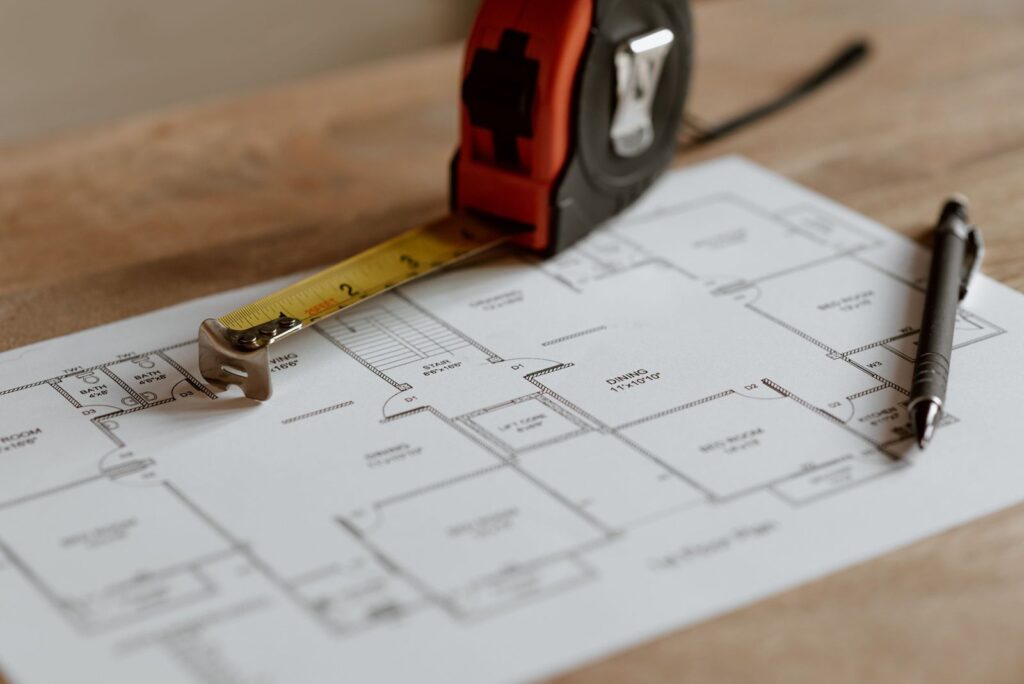
Takeoffs are often the most time-consuming part of an estimate. Measuring areas, counting fixtures, calculating linear footage, and organizing quantities by trade or cost code is detailed, repeatable work that a trained estimator can perform from anywhere using your drawings and specifications.
Bid Documentation and Organization
Downloading plan sets, tracking addenda, organizing specifications, and keeping bid folders in order sounds simple. It also consumes hours. A dedicated estimator can own this process so nothing gets missed when addendum four arrives the day before the bid is due.
Subcontractor and Supplier Pricing Support
Your estimator can help prepare bid invitations, track which subcontractors and suppliers have responded, organize the quotes that come in, and build leveling sheets so your team can compare scopes side by side.
Preliminary Estimates and Pricing Updates
Using your historical data and pricing, a remote estimator can prepare early budget numbers, update unit costs, and run comparisons against similar past projects. BLS notes that estimators often check databases and their own records to compare the costs of similar projects. That kind of record-keeping becomes much more valuable when one person maintains it consistently.
Proposal Preparation
Once the numbers are approved, someone still has to assemble the proposal, inclusions, exclusions, and supporting documents. That’s another task that can move off a senior person’s desk.
What Should Stay In-House?
Good delegation is about drawing clear lines, not handing over everything.
Your senior team should usually keep:
- Final pricing and margin decisions. The number you submit is a commercial decision tied to strategy, risk, and relationships.
- Go/no-go bid decisions. Deciding which projects to pursue depends on your backlog, your clients, and your appetite for risk.
- Risk assessment and contract review. Interpreting contract terms and site conditions often requires local knowledge and authority.
- Client and owner relationships. Your estimator can support communication, but the relationship belongs to your company.
- Site visits. Anything that requires someone physically on site stays local.
Think of it this way: the remote estimator builds and organizes the estimate. Your senior estimator or owner reviews it, adjusts it, and decides what goes out the door. The judgment stays with you. The hours move.
Dedicated Estimator vs. Project-Based Estimating Service
Here’s a quick way to compare the two models:
| Factor | Project-Based Service | Dedicated Remote Estimator |
|---|---|---|
| Who does the work | Varies by job | The same person every day |
| Knowledge of your cost data | Limited | Builds over time |
| Uses your templates and standards | Sometimes | Always |
| Availability during your hours | Depends on the vendor | Works your schedule |
| Best for | Occasional overflow | Consistent bid volume |
| Cost structure | Per bid or per project | Predictable monthly fee |
The biggest difference is what happens after the first few months. A project-based service starts from scratch every time. A dedicated estimator learns how you price general conditions, which suppliers respond quickly, how your senior estimator likes takeoffs organized, and which mistakes your team never wants to see again.
That accumulated knowledge is hard to put a number on, but it shows up in faster turnaround and fewer review corrections.
How to Make a Remote Estimating Setup Work
Remote estimating works best when the process is deliberate. A few practical steps make a big difference.
Hand Over Your Templates and Cost Codes
Give your estimator the same estimating templates, cost code structure, and spreadsheets your in-house team uses. Consistency makes review faster and keeps every estimate looking like it came from your company.
Define Review Checkpoints
Agree on when estimates get reviewed. For example, takeoffs might be reviewed before pricing begins, and the full estimate reviewed two days before the bid is due. Checkpoints catch issues early instead of the night before submission.
Share Historical Data
Past estimates, actual job costs, and closeout data help a remote estimator understand how your company really prices work. The more context they have, the better their first drafts become.
Use Shared Tools
Cloud-based plan rooms, shared drives, and your existing estimating and takeoff software keep everyone working from the same files. Many of the same principles we covered in How to Manage a Remote CAD Team Without Losing Quality or Control apply here: clear standards, consistent file management, and regular communication.
Start With One Trade or Project Type
Rather than handing over every bid on day one, begin with a project type you bid often. Once the process is reliable, expand the scope. This is the same approach we recommend for a virtual AEC assistant: start narrow and let the role grow.
What to Look for When You Hire a Construction Estimator Remotely
Whether you hire locally or remotely, the fundamentals don’t change. Look for:
- Construction-specific experience. BLS notes that construction cost estimators typically need a bachelor’s degree in a related field, such as construction or engineering, and that some employers prefer candidates with construction industry experience.
- Ability to read drawings and specifications. Takeoffs are only as accurate as the estimator’s understanding of the plans.
- Software familiarity. Experience with takeoff and estimating tools, and comfort with CAD or BIM files when needed.
- Attention to detail. As BLS puts it, “minor changes may greatly affect the overall expense of a project.”
- Clear communication. Your estimator needs to flag missing information, scope gaps, and questions early.
- Availability during your working hours. Bid days don’t wait for a time zone difference.
A practical test helps. Ask finalists to complete a takeoff from a sample set of drawings and compare it against your own numbers.
How Remotation Fits In
Remotation helps US construction, engineering, and architecture firms hire dedicated estimators who work exclusively for one company. Your estimator works during your US business hours from our fully managed office in Karachi, supported by a management team of experienced civil engineers and an office manager who provides day-to-day oversight and accountability.

The process is straightforward. You tell us what estimating experience you need. We source and pre-screen candidates, then you interview the shortlist and choose whom to hire. Remotation acts as the employer of record, handling payroll, HR, taxes, benefits, and office infrastructure. You pay one all-inclusive monthly fee, and the estimator is yours, never shared with or reassigned to another client.
You can browse real professional profiles and review pricing by role to see how a dedicated estimator could fit your budget.
Frequently Asked Questions
Is outsourced construction estimating accurate?
Accuracy depends on the estimator’s experience, the quality of the information they receive, and your review process. A dedicated estimator who uses your templates and historical data, with clear review checkpoints, can produce estimates that meet the same standard as in-house work.
Can a remote estimator handle bids for any trade?
That depends on the person’s background. Some estimators specialize in civil and site work, others in commercial building or specific trades. Define the project types you bid most often and hire for that experience.
Will a remote estimator replace my senior estimator?
No. The goal is to give your senior estimator more time for pricing strategy, risk review, and client relationships by moving takeoffs, documentation, and organization to a dedicated support role.
How quickly can a dedicated estimator get up to speed?
It varies with the complexity of your work and how well your processes are documented. Sharing templates, cost codes, and past estimates from the start shortens the learning curve considerably.
Conclusion: Bid More Without Stretching Your Team Thinner
Every bid you skip because nobody has time to prepare it is work you never had a chance to win. And every estimate rushed through at midnight carries risk you’ll feel later on the job.
Outsourced construction estimating, done through a dedicated estimator, gives your company more preconstruction capacity without forcing a difficult local hire. Your senior people keep control of pricing and strategy. Your remote estimator handles the takeoffs, documentation, and organization that currently consume so much of your senior team’s week.
If your bid calendar is running ahead of your team, it may be time to add an estimator who works for you and you alone. Book a free consultation with Remotation to talk through your estimating workload and the kind of professional who could help you bid more work.