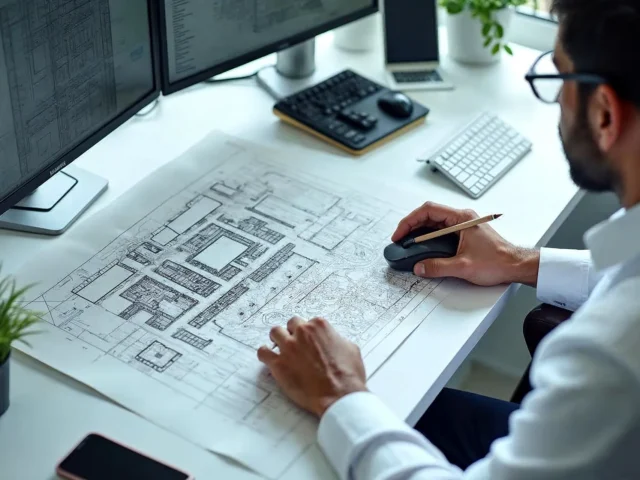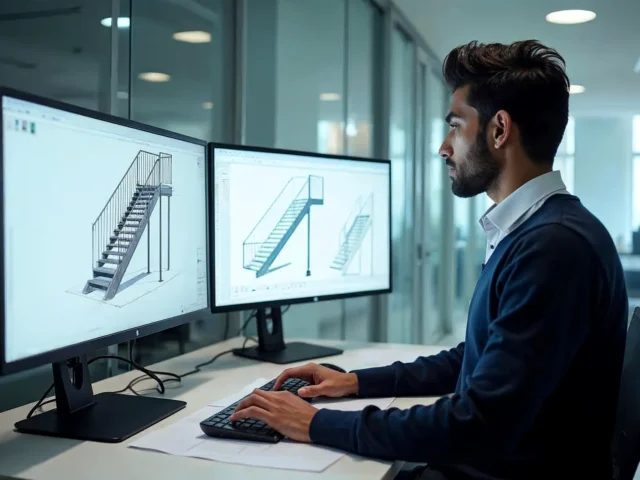



Civil engineering outsourcing is the practice of having a dedicated outside professional or team produce part of your civil design and drafting work, such as site plans, grading, drainage, utility layouts, roadway plans, and plan set production, while your licensed engineers keep ownership of the design and the final seal. Done well, it works like an extra production desk in your office: same standards, same project schedule, more capacity.
Land development and infrastructure firms tend to feel workload swings sharply. A few subdivision approvals or a public works award can double the drafting load in a month. This guide walks through civil engineering outsourcing scope by scope, so you can see which parts of a civil project are a natural fit, what usually stays with your in-house team, and how firms set the model up so it runs smoothly. If you want the broader picture across all engineering disciplines, start with our guide to what engineering outsourcing is and how it works.
Civil Engineering Outsourcing: Quick Answers
- What is civil engineering outsourcing? Sending defined civil design and drafting work, such as site, grading, drainage, utility, and roadway plans, to a dedicated outside professional or team that works in your standards.
- Can civil engineering be outsourced? Yes. Production work outsources very well, while design decisions, client and agency coordination, and the engineer-of-record seal stay with your licensed team.
- What do firms outsource most often? Site plans, grading plans, storm drainage and utility layouts, plan and profile sheets, details, redlines, as-builts, and Civil 3D drafting and model updates.
- What is an outsourced civil engineer? A civil engineer or designer who works for your firm through an outside provider, often full time and dedicated to your projects, rather than on your local payroll.
- Who uses outsourcing civil engineering services? Land development consultants, municipal and infrastructure firms, surveyors, contractors with in-house design groups, and architecture firms that need site work.
- How do firms get started? Pick one repeatable scope, share CAD standards and a sample plan set, and begin with one dedicated professional before adding more.
What Is Civil Engineering Outsourcing?
Civil engineering outsourcing covers a wide range of arrangements. At one end, a firm sends a single grading plan to an outside drafter. At the other, a firm builds a standing remote production group that works on its projects every day. The common thread is that the outside professionals produce the work, and the firm’s own engineers direct it, review it, and stand behind it.
What makes civil work a strong fit is its structure. Civil plan sets follow a predictable order: existing conditions, demolition, site layout, grading, drainage, utilities, erosion control, and details. Each sheet type has clear inputs, such as a survey, a design criteria memo, or a reviewer’s redlines, and a clear output. That makes it easy to hand off well-defined pieces of a project while the engineer of record keeps control of the whole.
Why Civil Firms Are Outsourcing More Production Work
Demand for civil work keeps growing. The U.S. Bureau of Labor Statistics projects employment of civil engineers to grow 6 percent from 2025 to 2035, faster than the average for all occupations, with about 22,700 openings each year. At the same time, infrastructure renewal, housing demand, and stormwater requirements all add sheets to every project.
For many firms, the bottleneck is not engineering judgment. It is production hours: the time it takes to turn a design into a clean, permit-ready plan set and then carry it through rounds of agency comments. Civil engineering outsourcing adds those production hours without asking senior engineers to spend their evenings in Civil 3D. Licensed staff get more time for design, clients, and approvals, and projects keep moving when the workload spikes.
Civil Engineering Services Firms Commonly Outsource
The scopes below are where outsourcing civil engineering services tends to deliver the most value. Most firms start with one or two of them and expand as the working relationship settles in.
Site Plans and Land Development

Site layout is often the first scope firms send out. An outsourced civil designer can build the existing conditions base from survey data, lay out buildings, parking, drive aisles, curbs, and sidewalks, and produce dimension and layout sheets. For subdivision work, that extends to lot layouts, right-of-way lines, easements, and phasing plans. Because land development projects repeat the same sheet types, an outside team learns your layout conventions quickly.
Grading and Earthwork
Grading plans take time: spot elevations, contours, slope labels, retaining wall top and bottom elevations, and ADA route checks on walks and parking. An experienced civil designer can build the finished surface in Civil 3D from your engineer’s grading concept, run earthwork volume reports, and keep the grading plan updated as the site layout changes. Your engineer sets the design intent; the outsourced professional turns it into a precise, labeled surface and sheet.
Drainage and Stormwater
Storm drainage is a core civil scope and a natural one to share. Outside professionals commonly draft storm sewer plans and profiles, delineate drainage areas, prepare detention and water quality pond layouts, and set up pipe networks in Civil 3D based on your hydraulic design. They also draft erosion and sediment control plans and stormwater pollution prevention plan exhibits, which follow the EPA’s construction stormwater program and the state permit that applies to the site.
Utility Plans
Water, sanitary sewer, and dry utility plans follow clear patterns once your standards are set: pipe sizes, materials, fittings, valves, manholes, and crossings with other utilities. An outsourced civil designer can lay out utility plans and profiles, draft connection details, and prepare the exhibits that utility providers and cities ask for. Keeping your standard detail library in their hands means every set looks like it came from your office.
Roadway and Paving Plans
For roadway, street, and paving work, outsourced teams often prepare alignments, profiles, typical sections, cross sections, pavement marking and signage plans, and intersection details. Public roadway projects tend to have strict agency standards, so firms usually share the relevant DOT or city manual and sheet templates at the start. From there, plan and profile production becomes a steady, repeatable workflow.
Plan Sets, Details, and Civil 3D Drafting
Behind every scope sits plan set production: sheet setup, title blocks, sheet indexes, standard details, notes, revisions, and markup pickup after each review cycle. This is where many firms see the fastest benefit. Converting older paper or PDF records into usable drawings is another common task, which our guide to CAD conversion covers in more detail. For a deeper look at the software side, our post on Civil 3D outsourcing walks through surfaces, corridors, pipe networks, and model updates.
What to Outsource and What to Keep In-House
The simplest way to divide civil work is by responsibility. Production and documentation move to the outsourced team. Judgment, relationships, and accountability stay in-house.
| Usually outsourced | Usually kept in-house |
|---|---|
| Base drawings from survey data | Design criteria and engineering calculations |
| Site, grading, drainage, and utility sheets | Final design decisions and value engineering |
| Plan and profile sheets, sections, and details | Client meetings and agency coordination |
| Redline pickup and revision cycles | QA review and sign-off |
| As-builts and record drawings | Engineer-of-record seal and signature |
Firms often move the line over time. A dedicated civil designer who has worked on your projects for a year can take on more of the early layout and design development work, always under your engineers’ direction.
Dedicated Outsourced Civil Engineer vs. Project-Based Work
There are two common ways to hire outsourced civil engineers. Project-based outsourcing sends a defined job, such as one grading plan or one plan set, to a vendor who assigns whoever is available. A dedicated outsourced civil engineer or designer works full time on your projects, learns your standards, and stays with your firm from one project to the next.
The dedicated model fits firms with a steady pipeline of civil work, because the same person builds up knowledge of your templates, your reviewers’ preferences, and the agencies you submit to. Our comparison of offshore vs. local civil engineering teams looks at how the two staffing options compare, and our guide on how to hire civil engineers for a growing team covers the skills to look for. If drafting volume is the main pressure, see how firms scale civil engineering drafting without expanding the in-house team.
How to Set Up Civil Engineering Outsourcing

A clear start makes the biggest difference. Most firms follow a sequence like this one.
1. Choose a First Scope
Pick a repeatable scope with clear inputs, such as grading plans for commercial sites, storm and utility plans for subdivisions, or redline pickup on active plan sets. A focused first scope lets the outsourced professional learn your standards on real work.
2. Share Your Standards and a Sample Set
Send your CAD and Civil 3D templates, layer and label styles, standard details, sheet setup, and one or two completed plan sets that represent your best work. The sample set often teaches more than any written guide.
3. Define the Review Flow
Agree on how work moves: who sends the markups, how revisions are tracked, and who signs off each sheet before it goes out. Your licensed engineer stays the reviewer and final approver.
4. Set an Overlapping Work Window
A few overlapping hours each day keep questions moving. Many firms use the overlap for a short morning check-in, so the outsourced team picks up redlines and the next priority before your office closes.
5. Grow From One Professional
Once the first scope runs smoothly, add the next one, or add a second person. Firms that grow this way build a remote civil team that knows their projects as well as the in-house staff does. Our guide to managing a remote CAD team shares practical habits for keeping that team aligned.
How Remotation Supports Civil Engineering Outsourcing
Remotation places dedicated civil engineers and designers, along with CAD drafters and BIM professionals, who work full time only for your firm, in your standards and on your schedule. The company is engineer-led: founder Ali Akber is a licensed P.E. who built the model around how civil and construction firms actually produce drawings. Our team works from Karachi, Pakistan, with our management office in Houston, USA, and each professional costs a fraction of the cost of local hiring, with clear monthly pricing. To talk through which civil scopes could move first, book a 15-minute intro call.
Frequently Asked Questions
What is civil engineering outsourcing?
Civil engineering outsourcing means having a dedicated outside professional or team produce part of your civil work, such as site, grading, drainage, utility, and roadway plans, while your licensed engineers direct the design, review the sheets, and seal the final set.
Can civil engineering be outsourced?
Yes. Civil production work, including plan sets, Civil 3D surfaces and pipe networks, details, redlines, and as-builts, outsources very well. Design decisions, agency coordination, and the engineer-of-record seal stay with your in-house team.
Which civil engineering services are best to outsource first?
Grading plans, storm drainage and utility plans, plan and profile sheets, and redline pickup are common first scopes because they repeat across projects and have clear inputs from your engineers.
How do you hire an outsourced civil engineer?
Look for experience with your project types and with Civil 3D, ask for sample sheets, and test with a real scope from a current project. Many firms work with a staffing provider that recruits a dedicated professional who works only on their projects.
Is outsourcing civil engineering a good fit for small firms?
Yes. Small civil firms often benefit the most, because one dedicated designer frees the principal engineer to focus on clients, design, and approvals while plan production keeps pace with new work.
What do outsourced civil engineers need to get started?
A clear first scope, your CAD and Civil 3D templates, standard details, a sample plan set, and a named reviewer on your team. For professional standards and continuing education, the American Society of Civil Engineers is a useful reference for in-house and outsourced team members alike.